Monday, November 9, 2020

The 10 Most Frequently Cited OSHA Violations in 2020 in Construction

OSHA

OSHA

Each year, OSHA releases a list of the most commonly cited Federal OSHA standards at the end of their fiscal year, which runs from October of the previous year to September. The list gives a glimpse into what contractors struggle the most with and also what OSHA inspectors focus the most on.

In years past, I shared the top 10 list of violations across all industries, but this year, I was able to find a list of construction-specific standards.

Generally speaking, the list of standards doesn’t have a lot of movement. Duty to have fall protection has been at the top of the list for several years, unsurprisingly. Despite being the leading cause of jobsite injuries and fatalities for a long time, fall protection is still a huge opportunity in the industry. That number is also compounded by the fact that OSHA has more fall related incidents to inspect, leading to more violations. Fall Protection, in total, accounts for 3 of the violations in the top 10.

Falling just outside the top 10 list was the Respirable Crystalline Silica Standard (1926.1153) with 288 violations and $538,696 in penalties.

Without further ado, here is the list of the Top 10 most frequently cited OSHA violations in Construction in 2020

1. Fall Protection – General Requirements (1926.501)

  • 4,134 violations

  • $22,313,961 in total penalties

2. Scaffolding (1926.451)   

  • 1,714 violations

  • $4,912,510 in total penalties

3. Ladders (1926.1053)

  • 1,575 violations

  • $4,695,884 in total penalties

4. Fall Protection – Training Requirements (1926.503)

  • 1,231 violations

  • $1,991,781 in total penalties

5. Personal Protective and Lifesaving Equipment - Eye and Face Protection (1926.102)

  • 1,096 violations

  • $3,495,424 in total penalties

6. General Safety and Health Provisions (1926.20)

  • 632 violations

  • $2,292,974 in total penalties

7. Head Protection (1926.100)

  • 578 violations

  • $1,593,688 in total penalties

8. Specific Excavation Requirements (1926.651)

  • 525 violations

  • $2,742,125 in total penalties

9. Aerial Lifts (1926.453)

  • 448 violations

  • $1,465,467 in total penalties

10. Fall Protection Systems Criteria and Practices (1926.502)

  • 429 violations

  • $1,208,248 in total penalties

More information: OSHA Citation Violations for Fiscal Year 2020 | OSHA


source https://www.constructionjunkie.com/blog/2017/10/2/the-10-most-frequently-cited-osha-violations-2020-construction-osha-1926

Wednesday, November 4, 2020

[VIDEO] Watch an 85 Year Old, 5 Story Building be Relocated 200 Feet with a ‘Walking Machine’

via YouTube

via YouTube

Usually, when a new development is going to go into a spot where a building already exists, that existing building gets blown into smithereens and its remaining rubble hauled away. BUT, there is apparently a different way to handle the situation now, which is by politely asking the building to walk away and to find a new home – well, kind of.

An 85-year old primary school in Shanghai, China was recently relocated 200 feet away and rotated 21 degrees to make way for a new development on its current home. By attaching 198 mobile supports under the support structure of the 5-story, 7,600 ton school, the building is able to “walk” to its new location.

While there are other ways to move a building, like a rail system or trucks, the building’s unique “T” shape created new challenges that had to be solved using the robotic leg supports. CNN reports that the legs have sensors attached to help control how the build moves. The technology was created by a company called Shanghai Evolution Shift in 2018 and was the school relocation was first time it was used in Shanghai.

Completed on October 15, the entire relocation process took 18 days, a pace of roughly 11 feet per day. The old school building will be turned into a center for heritage protection and cultural education.

Lan Wuji, the chief technical supervisor of the project, told CNN that, while he couldn’t share direct costs of the project, the method is generally cheaper than demolition and building a new structure.

To check out the robotic legs in action, you can watch the video below from the South China Morning Post. Special shout out to my good buddy, Rob, from Belts and Boxes for giving me a heads up about this.


source https://www.constructionjunkie.com/blog/2020/11/4/video-watch-an-85-year-old-5-story-building-be-relocated-200-feet-with-a-walking-machine

Tuesday, November 3, 2020

[VIDEO] CAT Creates Gigantic PAC-MAN Game Played with Remote Controlled Skid Steers

courtesy of CAT

courtesy of CAT

CAT is no stranger to finding extremely creative and expensive ways to show off their construction equipment.  In years past, they’ve created a giant Jenga game with 600 pound blocks and the world’s first moving golf course on the backs of their dump trucks. Now, they’re showing off some of their new technology with the release of the biggest PAC-MAN game you’ve ever seen.

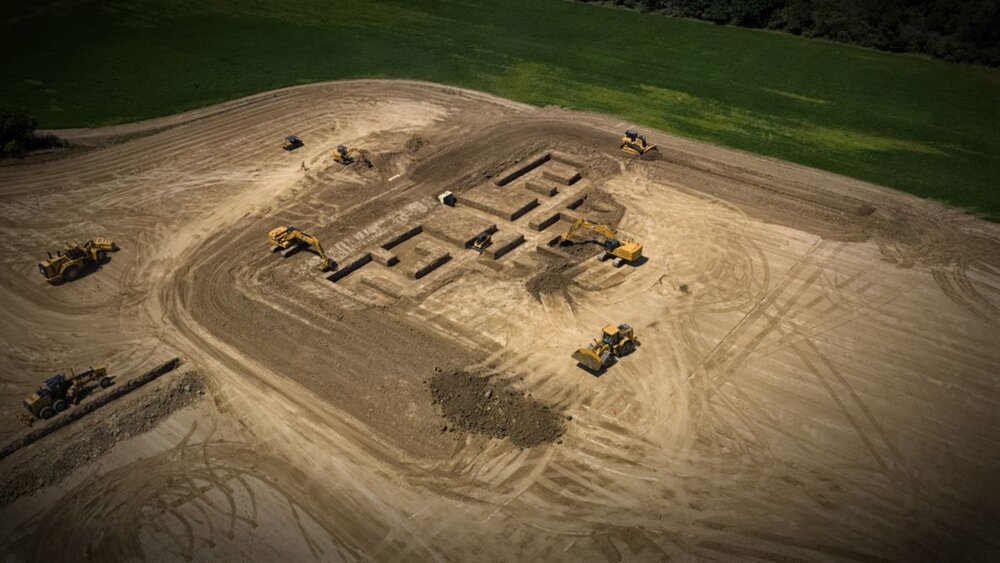
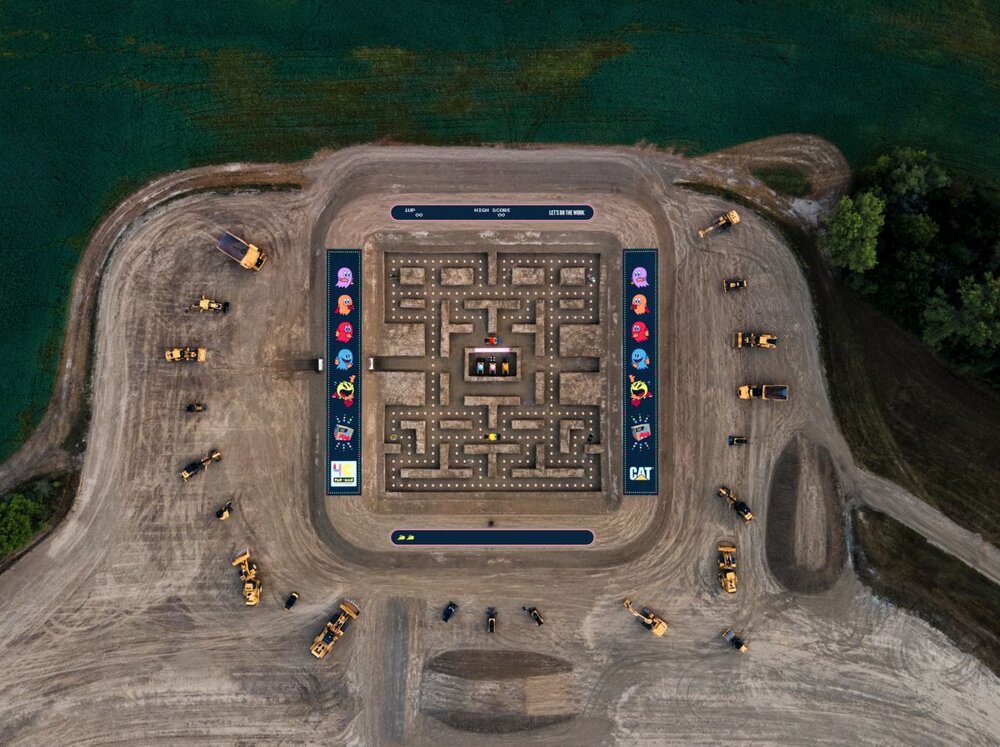
Measuring 162.4 feet by 180.4 feet, the PAC-MAN game that CAT created is 19,040% larger than the size of the original arcade game, but instead of a yellow circle PAC-MAN, your character is a CAT 236D3 Remote Controlled Skid Steer Loader, and instead of an animated screen, you’re playing in the dirt.

courtesy of CAT

courtesy of CAT

In total, it took 70 man hours to dig the game board, which amounted to 6,880 yards of cut/fill. A 1% grade was added from side to side for better drainage and the walls were dug to 4 feet deep. Of course, there were even more CAT machine used to build the course, including the CAT 336 Next Gen Excavator and the CAT 323 Excavator.  All of the machines were equipped with Cat Grade 3D to help ensure everyone was using the same plan.

“Cat GRADE with 3D enabled the workers to only handle material one time for digging, loading, hauling and dumping,” explains J. Archie Lyons, creative director, global brand strategy and activation for Caterpillar. “Reducing material handling is just one of the challenges our customers face, and Cat Grade technology greatly enhances jobsite efficiency.”

The five human players represented PAC-MAN and each of the four ghosts and operated the skid steers on the berm next to the course via remote control.

In conjunction with the PAC-MAN release, CAT released 4 videos of the event: A highlight reel of the gameplay, a timelapse video of the course construction, and 2 behind the Scenes videos: one going in-depth on the actual building of the course and the other focusing on the gameplay. I’ll include all 4 below the article, starting with the timelapse of the course build.


source https://www.constructionjunkie.com/blog/2020/11/3/video-cat-creates-gigantic-pac-man-game-played-with-remote-controlled-skid-steers

Wednesday, October 28, 2020

Hilti Unveils Semi-Autonomous Overhead Drilling Robot, Called Jaibot

courtesy of Hilti

courtesy of Hilti

Hilti, known for its wide selection of power tools and fastening applications for the commercial construction industry, recently took a step outside the box when they announced the release of an exoskeleton to help relieve the bodily toll overhead work takes on workers.  Yesterday, however, Hilti took that overhead work solution to the next level, by introducing their first robot, a semi-autonomous overhead drilling solution called Jaibot.

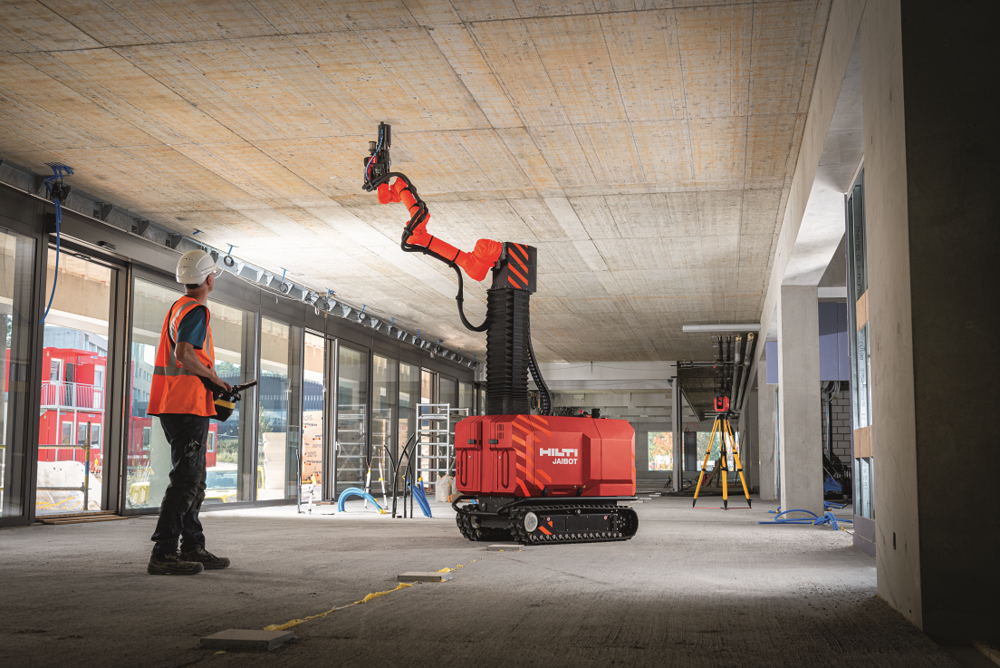
The Hilti Jaibot is a completely cordless overhead drilling solution that can automatically locate and drill holes for overhead MEP anchors based upon a BIM or CAD layout.  The unit requires an operator for set up, transport, and in field troubleshooting, but increases the accuracy of the holes, while reducing safety risks associated with overhead work.

 "The productivity of the construction industry has been lagging behind other sectors for years. Margin pressure and shortages of skilled labor are already facts of life in our industry and make it increasingly difficult to overcome productivity shortfalls. But leveraging the opportunities offered by digitization will compensate for it. We do this by intelligently linking processes, teams and data,” said Jan Doongaji, Member of the Executive Board, Hilti Group. “With Jaibot, and in close collaboration with our customers, we are further stepping toward realizing the efficiency that digital transformation can and will bring to construction sites.”

Jaibot Features

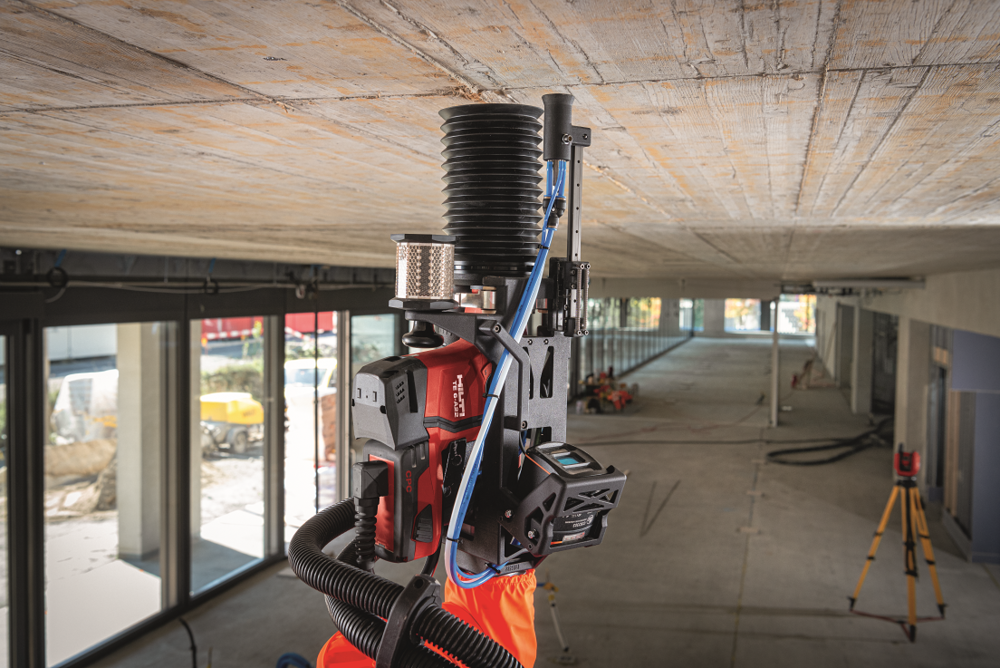
The Jaibot provides 8 hours of runtime off of a full charge, which includes the operation of the onboard drill, vacuum, total station, lifting arm, and tracks. The drilling arm is also equipped with a dust shroud and the vacuum contained within the unit is OSHA Table 1 compliant for silica dust containment.

courtesy of Hilti

courtesy of Hilti

The arm of the robot can reach overhead concrete slab heights between 8 and a half feet and 16 and a half feet above and the drill is optimized for holes of 3/16 of an inch up to 5/8 of an inch. In addition to drilling, the Jaibot also marks the holes with a customized paint color based upon trade or application.

If the drill hits rebar in the field, the operator has the ability to skip that specific hole or move it to a different location.  The as-built hole locations are automatically synced to the cloud for immediate access in the office.

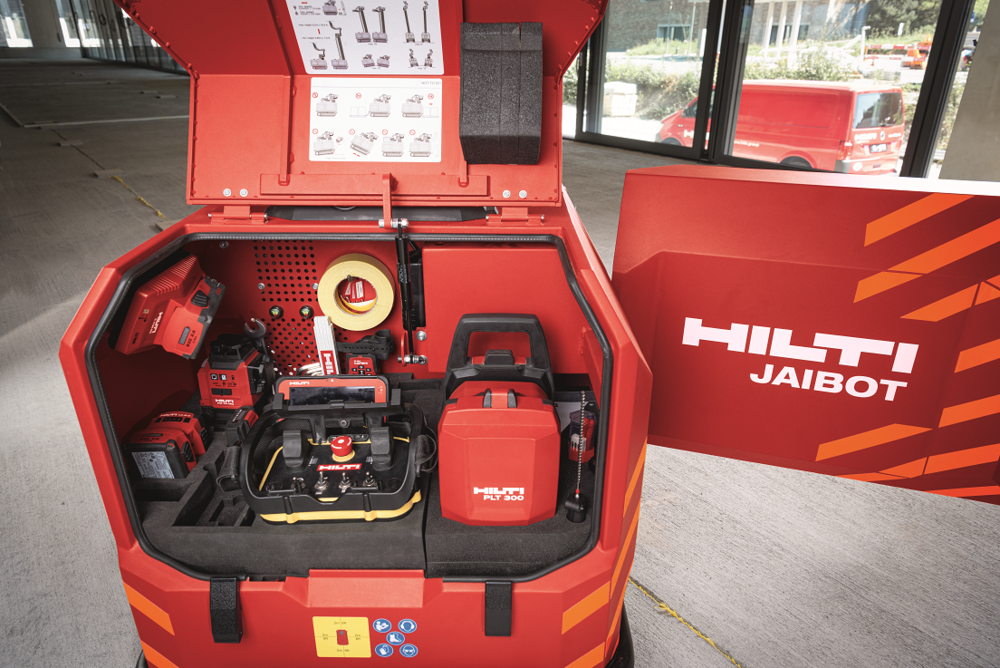
The machine also features additional storage for extra drill bits, tool batteries, or extra tools.

courtesy of Hilti

courtesy of Hilti

Jaibot Set Up

The Jaibot is shipped to the site in a storage crate that can be lifted by a forklift or a crane for movement around the jobsite. That same container also acts as a charging station and secure storage.

In “transport mode,” the Jaibot compacts itself to less than 3 feet wide and less than 5 and a half feet tall, allowing it to fit through most doorways and hoists.

Once the operator sets the ceiling height and location on the provided tablet, the Jaibot goes to work drilling for the concrete anchors in a 6 foot diameter based upon the CAD layout or BIM model uploaded via AutoCAD, Revit, or the Hilti Cloud.

The onboard Hilti PLT 300 total station makes sure that the holes are accurate within 1/8 of an inch.

Additional Applications

While overhead drilling is the very first focus of the Jaibot, Hilti reps made it clear that the possibilities are endless with this type of platform. BIM models make robotics work like this much more accessible to increase productivity, accuracy, and reduce safety hazards.

The Hilti Jaibot is expected to be available in 2021 and pricing has not yet been released. Check it out in action in the video below:


source https://www.constructionjunkie.com/blog/2020/10/28/hilti-unveils-semi-autonomous-overhead-drilling-robot-called-jaibot

Procore Releases Labor Productivity Tracker and Time & Material Tickets for Specialty Contractors

via Procore

via Procore

Specialty trades contractors are typically forced to use whatever project management software that the General Contractor or project owner of each project requires, but that doesn’t mean there aren’t benefits to having a project management system of their own. Procore has seen a large amount of these specialty contractors joining their platform over the past year and have just announced the release of two new features specifically for them: Real-Time Labor Productivity and Time & Material Tickets.

Real-Time Labor Productivity

Labor and productivity data can come from a ton of different sources, so Procore’s new feature helps to aggregate data transfer from multiple apps into one single source of truth.  This data can also be compared to unit-based budgets to help determine how your project is performing.

via Procore

via Procore

"We firmly believe that technology can make us better. It’s transforming the way we conduct our business by providing our teams with better tools to improve performance,” said Brad Sandidge, CFO, Marathon Electrical Contractors, in a press release. “Procore’s new Real-Time Labor Productivity feature allows us to track actual hours versus our budgeted hours by line item and thereby adds more precision to our planning and project management."

To see a preview of the Real-Time Labor Productivity feature, check out Procore’s website by clicking or tapping here.

Time & Material Tickets

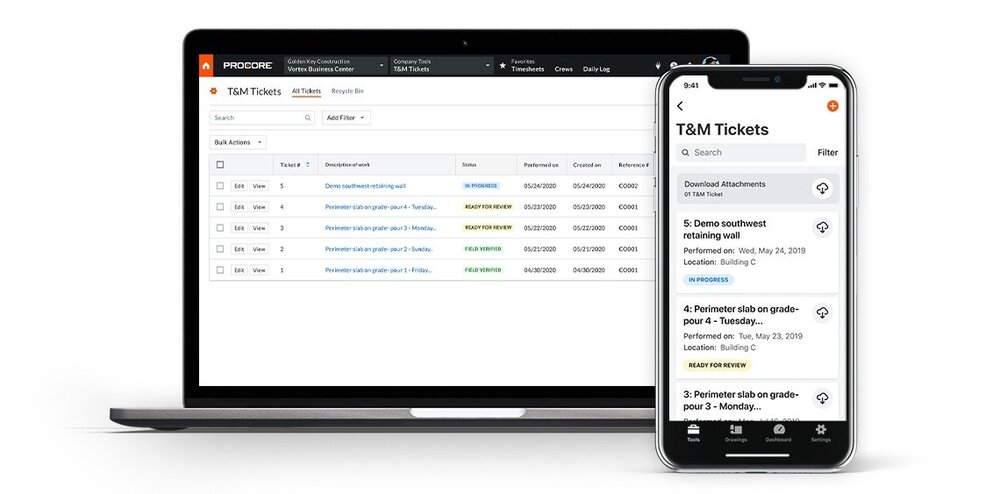
Time and material logs can take forever to get back to the office and get billed.  That could cause some frustration on the back end for the GC or project owner as they wait to pass these costs along.  As soon as out-of-scope work is requested in the field, they can be documented within the new Time & Material Ticket feature and be immediately available to the office staff.

via Procore

via Procore

“With Procore’s Time & Materials Ticket feature, we can track tickets easily, giving Project Managers and Accountants better visibility,” said Jessica French Goyette, Vice President, W. L. French Excavating Corporation. “This eliminates the chance to lose tickets, overlook tickets, or miss billings. This feature is an example of how Procore continues to problem solve for its customers.”

Within the ticket, all labor, equipment, and material costs can be captured on the jobsite with the app. Digital signatures can also be collected to verify agreement or work completion.

More detail about the Tim & Materials Ticket feature can be found on Procore’s website by clicking or tapping here.


source https://www.constructionjunkie.com/blog/2020/10/25/procore-releases-labor-productivity-tracker-and-time-amp-material-tickets-for-specialty-contractors

Tuesday, October 27, 2020

Procore Releases Two New Features for BIM Users : Dynamic Wall Elevations & Follow Me

via Procore

via Procore

Groundbreak, Procore’s annual construction technology conference, officially started today and, while it’s in a virtual capacity instead of in-person like usual, there’s no shortage of Procore news and updates. At Groundbreak 2 years ago, the company announced Procore BIM and, this year, their adding two new features to make even more user friendly in the field: Dynamic Wall Elevations and Follow Me.

“We invested in BIM to protect our customers’ investment in BIM,” said Dave McCool, Senior Product Manager, Procore. “Procore users spend so much time coordinating models that we want to make sure those models reach the field teams who are installing the work. The new features in Procore BIM give field teams better access to models and greater visibility to see exactly where each user is within the model. Procore users can leverage BIM in a new way, simplifying communication and collaboration from the field to the office.”

Dynamic Wall Elevations

The new Dynamic Wall Elevation feature allows users to get specific dimensions of wall penetrations, surface mounted objects, backing, and other elements in the field with a tap of the screen. Within the feature, users can zoom in and out, see the centerline dimension, or the outside dimension of any object within the model with an accuracy down to 1/8 of an inch.

“A lot of people talk about the model being the center of everything, and Procore’s Dynamic Wall Elevations feature actually makes that the case. Our communication with the people in the field who are actually constructing our projects has transformed. No question is left unanswered using Procore BIM,” said Scott Anderson, Integrated Construction Manager, Okland Construction.

You can check out more about Dynamic Wall Elevations in the video below:

Follow Me

Communication in construction is all about context.  The new Follow Me feature allows users to see the location all of the other users within the BIM model so you know exactly where the person is you’re talking to. It’s a simple solution, but could potentially reduce a ton of frustration for large field teams.

Check out more about Follow Me in the video below:


source https://www.constructionjunkie.com/blog/2020/10/25/procore-releases-two-new-features-for-bim-users-dynamic-wall-elevations-amp-follow-me

Monday, October 26, 2020

Construction Companies Can Now Monitor 3rd Party App Usage with Procore

courtesy of Procore

courtesy of Procore

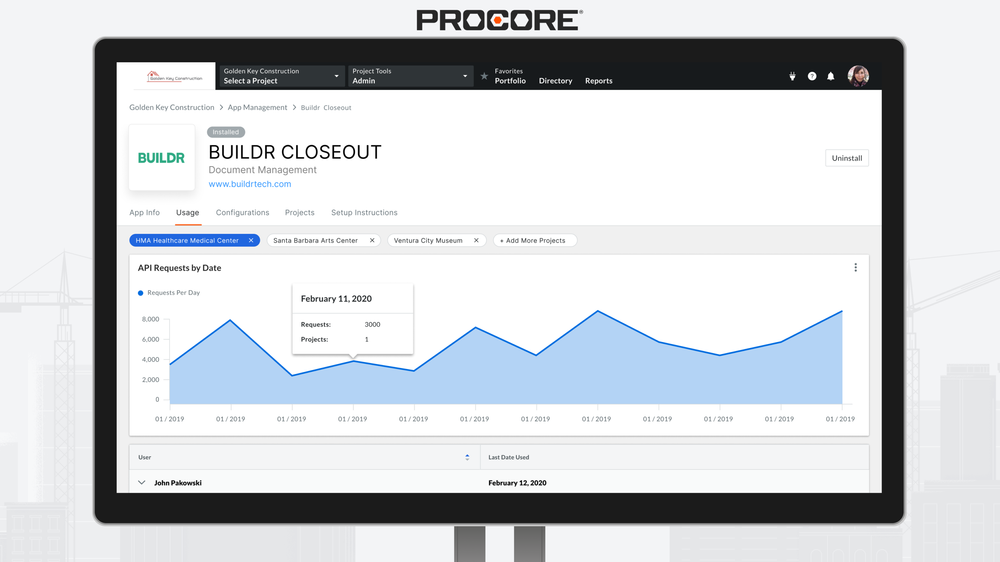
Chances are, if your construction company is using any sort of technology, you’re using more than one different application. That’s true for many Procore customers, as well, as over 40% of them use at least two other apps that are integrated into the Procore platform. In order to help contractors manage these 3rd party apps, Procore has recently released App Management Metrics to all of their customers.

By using App Management Metrics, Procore customers can see how often 3rd party apps are used, which projects they’re used on, and exactly who uses them. This insight could help make more informed decisions and determine which have the most value for their company.

“We rely on a number of applications that integrate with the Procore platform, and now Procore has given us the ability to easily and intuitively see how those applications are being utilized across our various projects,” said Denise Balzer from Robins & Morton, in a press release. “The release of App Management Metrics brings the tool full circle. The additional metrics gives us a next step advantage to see who our power users are, and use this information to make more informed decisions regarding our tech stack management.”

Procore has long been a proponent of allowing 3rd party app makers onto their platform and they have recently announced that they’ve reached a milestone of 250 partners in their App Marketplace.  I talked to a handful of those partners recently, ahead of this week’s Groundbreak technology conference, which you can check out by clicking or tapping this link.

“No one technology is going to solve it all, and that’s why we’ve built Procore on an open, flexible, and extensible platform,” said Kris Lengieza, Senior Director, Business Development at Procore. “Procore’s platform allows you to connect your software solutions on one core system that you can build upon. Partners are not just integrated with the Procore platform. They become part of the workflow, allowing all data to be integrated into Procore.”

If you’re interested in attending Groundbreak, which will be held virtually on October 27 and 28, you can find $10 off coupon codes in my exhibitor spotlight section on Construction Junkie’s Groundbreak 2020 home page.


source https://www.constructionjunkie.com/blog/2020/10/26/construction-companies-can-now-monitor-3rd-party-app-usage-with-procore